Uncategorized
ルネ・デカルト:近世哲学の父
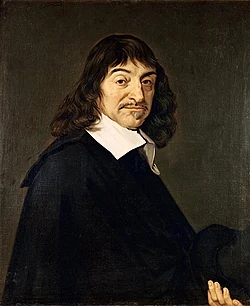
ルネ・デカルト(René Descartes、1596年3月31日 - 1650年2月11日)は、フランス出身の哲学者、数学者です。合理主義哲学の祖であり、近世哲学の出発点として広く知られています。ラテン語名はレナトゥス・カルテシウス(Renatus Cartesius)です。

哲学と思想
デカルトは、確実な知識の基盤を求めて「方法的懐疑」を提唱しました。あらゆる事柄を疑う過程で、疑っている自分自身の存在だけは否定できないという結論に達し、「我思う、故に我あり(Cogito, ergo sum)」という命題を導き出しました。この命題は、自己の精神を真理の出発点とする近代的な主観性の確立を意味しています。

数学への貢献
数学の分野では、代数と幾何学を統合する解析幾何学の基礎を築きました。平面上の点を2つの実数(座標)で表す手法は「デカルト座標」として知られ、現代の数学教育や科学技術において不可欠な概念となっています。
参考文献
- 1821年にスウェーデンで発見された頭蓋骨だけは、パリ市内にあるシャイヨ宮の人類博物館に保存され、1999年7月31日から同10月17日まで日本の国立科学博物館で開催された<大「顔」展>で、頭蓋骨のデータを元に復元された胸像とともに、展示された。人類博物館は2010年現在改装中のため、頭蓋骨は同市内の国立自然史博物館に保管されており、展示はされていない。
- 幾何学部分以外は、神学者のエティエンヌ・ド・クルセル Etienne de Courcelles) がラテン語に訳し、デカルト自身が校閲したとのことである。
- スピノザとカントはデカルトの継承者としてデカルトを読み替えていく。
- ルネ・デカルト『方法序説』、山田弘明訳、ちくま書房〈ちくま学芸文庫〉、pp.234-235
- ルネ・デカルト『方法序説』落合太郎訳、岩波文庫、(訳者「解題」pp.6-7)
- 神野慧一郎「デカルトあるいは熟慮断行の哲学者」20頁,『方法序説ほか』収録 中央公論新社,2001年
- “Detailed Discussion of Philosophy and Animals”. 2022年3月29日閲覧。
- “Scientists Have Learned from Cases of Animal Cruelty”. 2022年3月29日閲覧。
- Bertrand Russell (2004) History of western philosophy Archived 16 August 2021 at the Wayback Machine. pp. 511, 516–17.
- Heidegger [1938] (2002), p. 76 quotation:
- Schmaltz, Tad M. Radical Cartesianism: The French Reception of Descartes Archived 16 August 2021 at the Wayback Machine. p. 27 quotation: The Descartes most familiar to twentieth-century philosophers is the Descartes of the first two Meditations, someone preoccupied with hyperbolic doubt of the material world and the certainty of knowledge of the self that emerges from the famous cogito argument.
- Roy Wood Sellars (1949) Philosophy for the future: the quest of modern materialism quotation: Husserl has taken Descartes very seriously in a historical as well as in a systematic sense [...] [in The Crisis of the European Sciences and Transcendental Phenomenology, Husserl] finds in the first two Meditations of Descartes a depth which it is difficult to fathom, and which Descartes himself was so little able to appreciate that he let go "the great discovery" he had in his hands.
- Martin Heidegger [1938] (2002) The Age of the World Picture quotation: For up to Descartes...a particular sub-iectum...lies at the foundation of its own fixed qualities and changing circumstances. The superiority of a sub-iectum...arises out of the claim of man to a...self-supported, unshakeable foundation of truth, in the sense of certainty. Why and how does this claim acquire its decisive authority? The claim originates in that emancipation of man in which he frees himself from obligation to Christian revelational truth and Church doctrine to a legislating for himself that takes its stand upon itself.
- Ingraffia, Brian D. (1995) Postmodern theory and biblical theology: vanquishing God's shadow Archived 16 August 2021 at the Wayback Machine. p. 126
- Norman K. Swazo (2002) Crisis theory and world order: Heideggerian reflections Archived 16 August 2021 at the Wayback Machine. pp. 97–99
- Lovitt, Tom (1977) introduction to Martin Heidegger's The question concerning technology, and other essays, pp. xxv–xxvi
- Briton, Derek The modern practice of adult education: a postmodern critique p. 76
- Martin Heidegger The Word of Nietzsche: God is Dead pp. 88–90
- Heidegger [1938] (2002), p. 75 quotation: With the interpretation of man as subiectum, Descartes creates the metaphysical presupposition for future anthropology of every kind and tendency.
- Schwartz, B. I., China and Other Matters (Cambridge, MA: Harvard University Press, 1996), p. 95 Archived 16 August 2021 at the Wayback Machine., quotation: ... the kind of anthropocentric subjectivism which has emerged from the Cartesian revolution.
- Charles B. Guignon Heidegger and the problem of knowledge Archived 16 August 2021 at the Wayback Machine. p. 23
- Husserl, Edmund (1931) Cartesian Meditations: An Introduction to Phenomenology quotation: When, with the beginning of modern times, religious belief was becoming more and more externalized as a lifeless convention, men of intellect were lifted by a new belief: their great belief in an autonomous philosophy and science. [...] in philosophy, the Meditations were epoch-making in a quite unique sense, and precisely because of their going back to the pure ego cogito. Descartes work has been used, in fact to inaugurates an entirely new kind of philosophy. Changing its total style, philosophy takes a radical turn: from naïve objectivism to transcendental subjectivism.
- Maclean, I., introduction to Descartes, R., A Discourse on the Method of Correctly Conducting One's Reason and Seeking Truth in the Sciences (Oxford: Oxford University Press, 2006), pp. xliii–xliv Archived 16 August 2021 at the Wayback Machine..
- Cottingham, John; Murdoch, Dugald; Stoothof, Robert (1984). “Comments on a Certain Broadsheet”. The Philosophical Writings of Descartes. Cambridge University Press. p. 293. ISBN 978-0-521-28807-1. オリジナルの1 August 2020時点におけるアーカイブ。 2020年5月24日閲覧。
- Cottingham & Williams 1996.
- “The Rosicrucian history”. www.rosicrucian.org. 2015年1月22日時点のオリジナルよりアーカイブ。2021年5月13日閲覧。
- Bond, Steven (24 June 2011). “"R.C.": Rosicrucianism and Cartesianism in Joyce and Beckett”. Miranda (4–2011). doi:10.4000/miranda.1939. ISSN 2108-6559. OCLC 5497224736. オリジナルの2 June 2018時点におけるアーカイブ。.
- Henri, John; Nolan, Lawrence (26 January 2015). Nolan, Lawrence. ed. “Rosicrucian”. The Cambridge Descartes Lexicon (Cambridge University Press): 659–60. doi:10.1017/CBO9780511894695.224. ISBN 978-0511894695. オリジナルの10 June 2018時点におけるアーカイブ。 2021年5月13日閲覧。.
- Mansikka, Tomas (21 April 2018). “Esotericism in reverse. Descartes and the poetic imagination in the seventeenth century” (pdf). Approaching Religion 8 (1): 84. doi:10.30664/ar.66731. ISSN 1799-3121. OCLC 8081521487 2021年5月13日閲覧。.
- 谷川多佳子『デカルト「方法序説」を読む』(新版・岩波現代文庫、2014年)がある。
- 研究に山田弘明『デカルトと哲学書簡』(知泉書館、2018年)。文庫判に『デカルト=エリザベト往復書簡』(山田弘明訳、講談社学術文庫、2001年)